Manual labeling slowed training and increased errors
Every sentiment and intent model began with thousands of consumer messages labeled by hand in a spreadsheet. The work was slow, physically repetitive, and error-prone. Misclicks and inconsistent judgments introduced noise that surfaced later in model quality.
“After annotating for a while... I get tired and I end up misclicking a lot.”
— Data Annotation Specialist
Hotkeys increased speed; confirmations protected quality
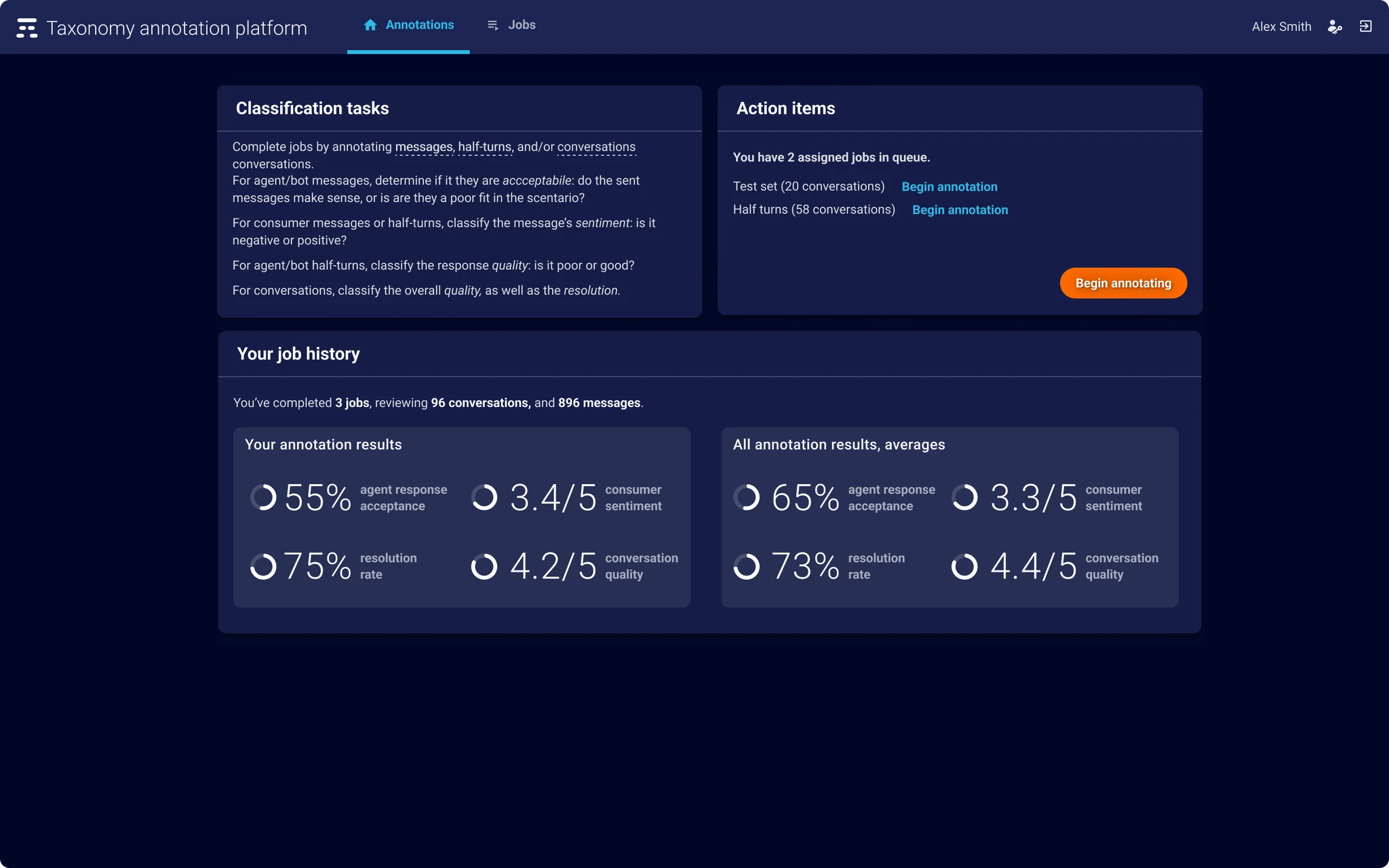
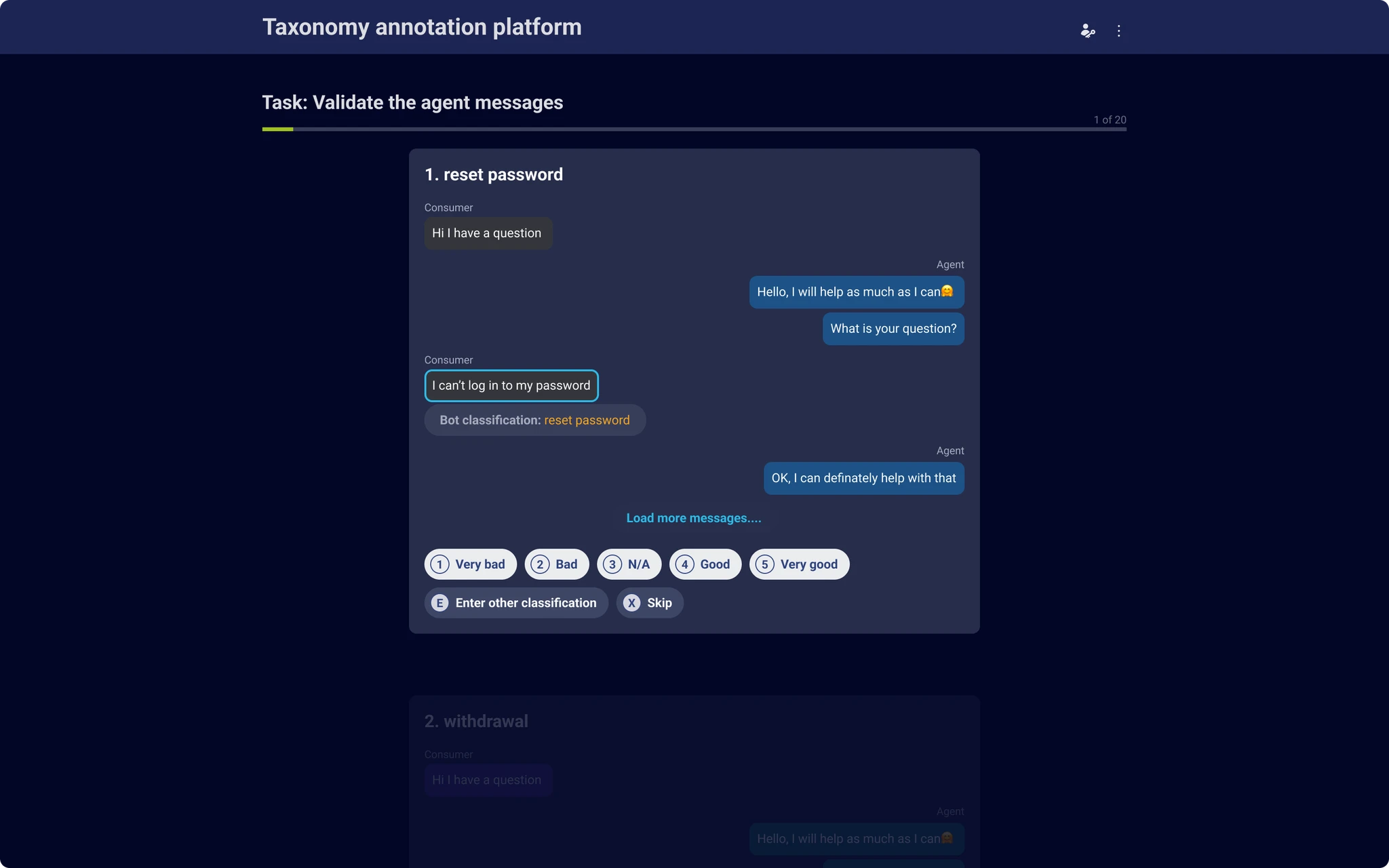
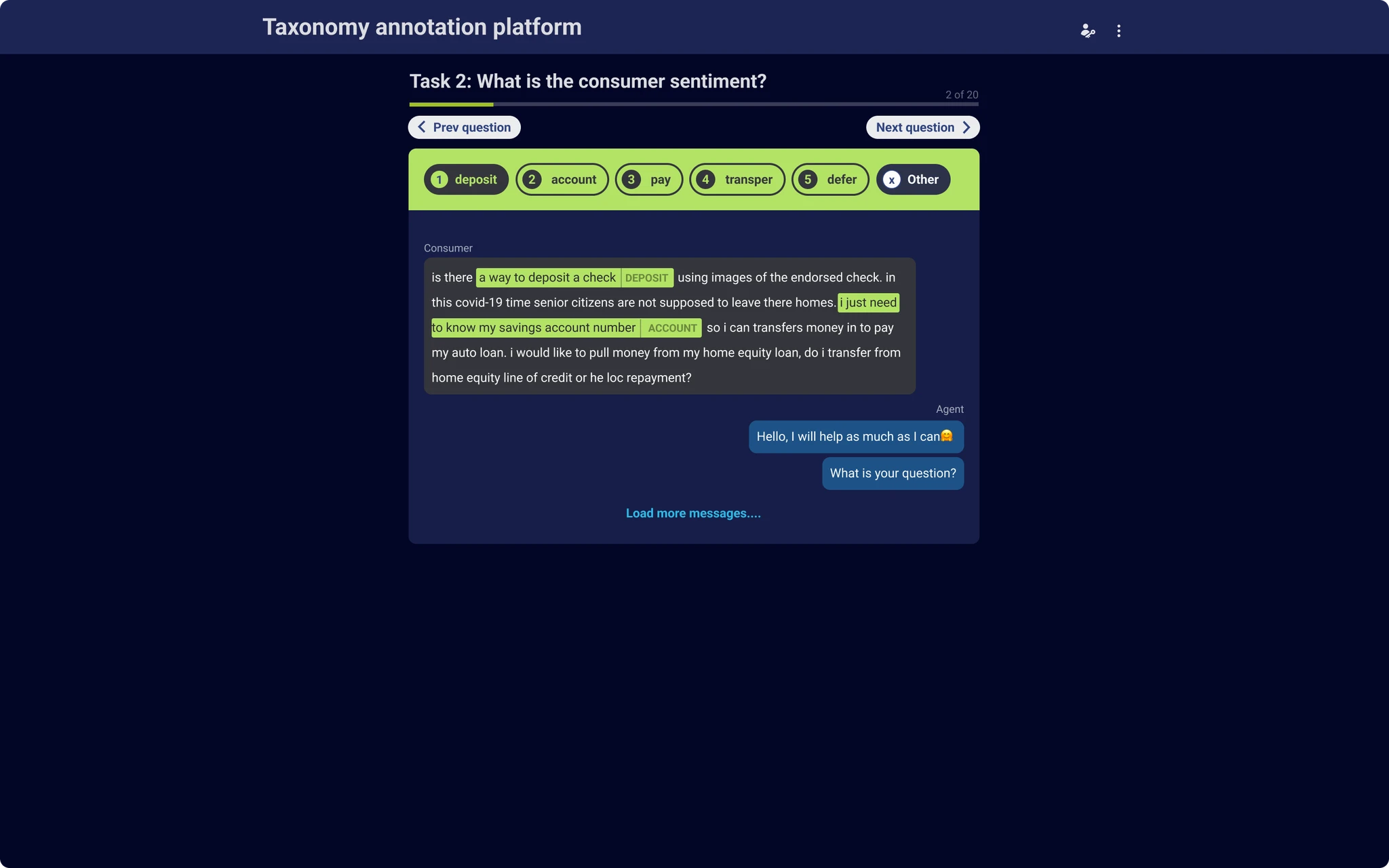
Interviews with annotators and benchmarks of Prodigy and Label Studio produced three rules: keep hands on the keyboard, make the hierarchy calm enough for hour four of a shift, and catch accidental labels before they entered the training set.
Training cycles moved from quarterly to monthly
- 86% faster than spreadsheets
- 15% fewer annotation errors
- Full team adoption within a week
- Model training cycles: quarterly → monthly
“This is much better to use than working with spreadsheets. Reading the text is much easier, I make fewer mistakes, and I'm much faster at annotation.”
— Lar, Insights Manager
Measure agreement, not only throughput
Removing controls mattered as much as adding shortcuts: fewer choices increased labeling speed while reducing errors.
Inter-annotator agreement — how often two people tag the same message the same way — should have been a day-one metric, not something bolted on after launch.